15 DIY Brain Games to Tire Out Your Hyperactive Dog 🐶
Can your dog’s energy power a small rocket? Probably not, but close enough after these games.
These brain workouts are fun, practical, and surprisingly low on gear. You’ll see your pup settle faster and stay happier between adventures.
Ready to turn fur into focus? Let’s dive in and pick a few that suit your pup’s style and your living room chaos level.
1. Hide and Seek Treat Trail
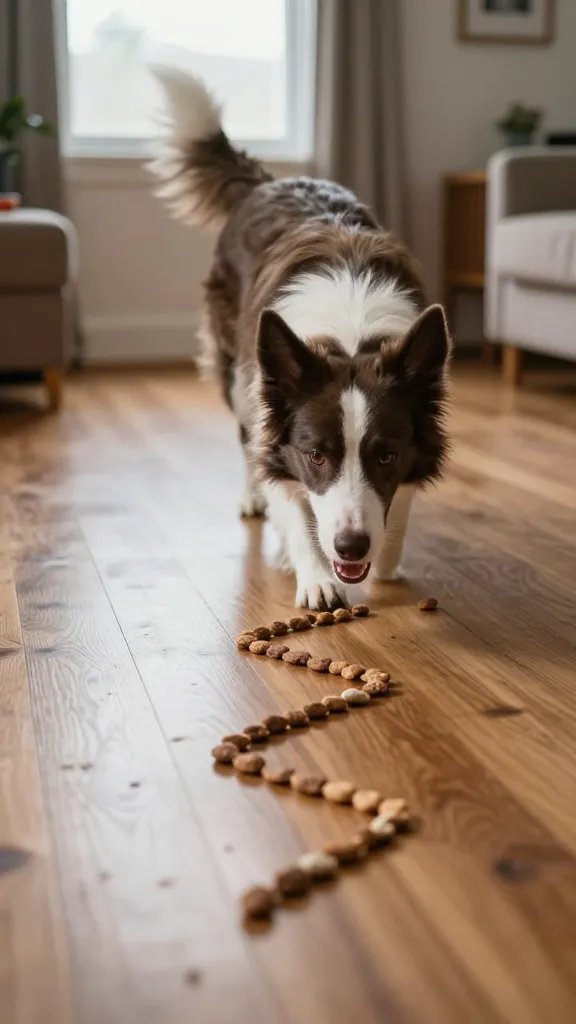
This classic favorite taps your dog’s nose work and problem solving. Start with simple hiding spots and level up as your dog gets the hang of it.
Why it works: It stimulates sniffing, decision making, and following a scent trail.
How to setup:
- Grab small, tasty treats or kibble
- Place them in a zigzag path around a room
- Encourage your dog to follow the trail to a bigger reward
Tip: Keep the path short at first and gradually increase distance for more endurance. Benefits show up as calmer energy later in the day.
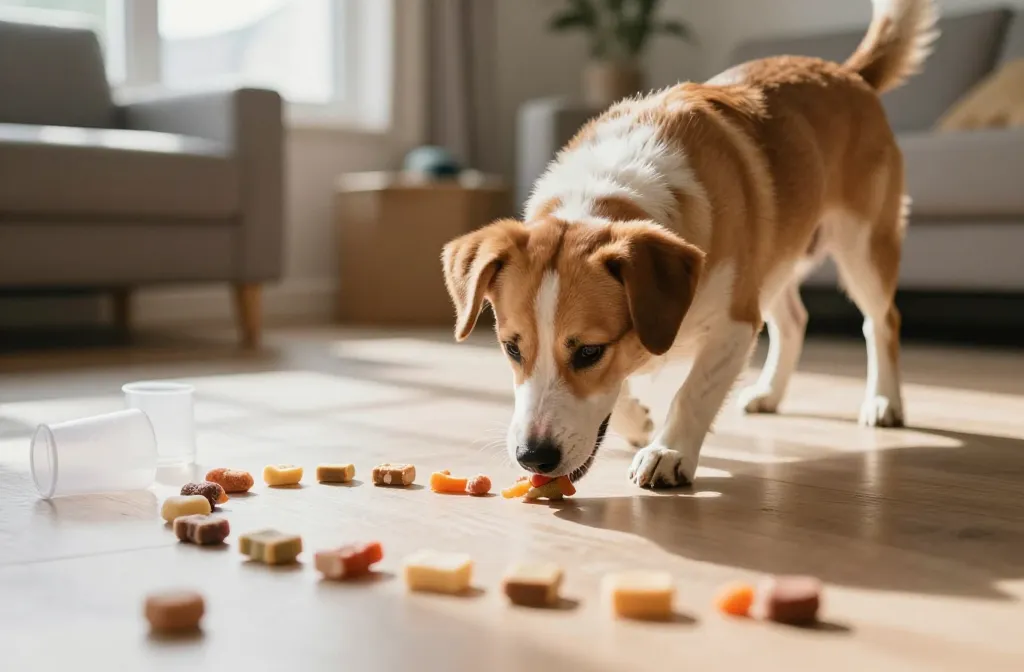
2. Cupcake Cup Sniff Game
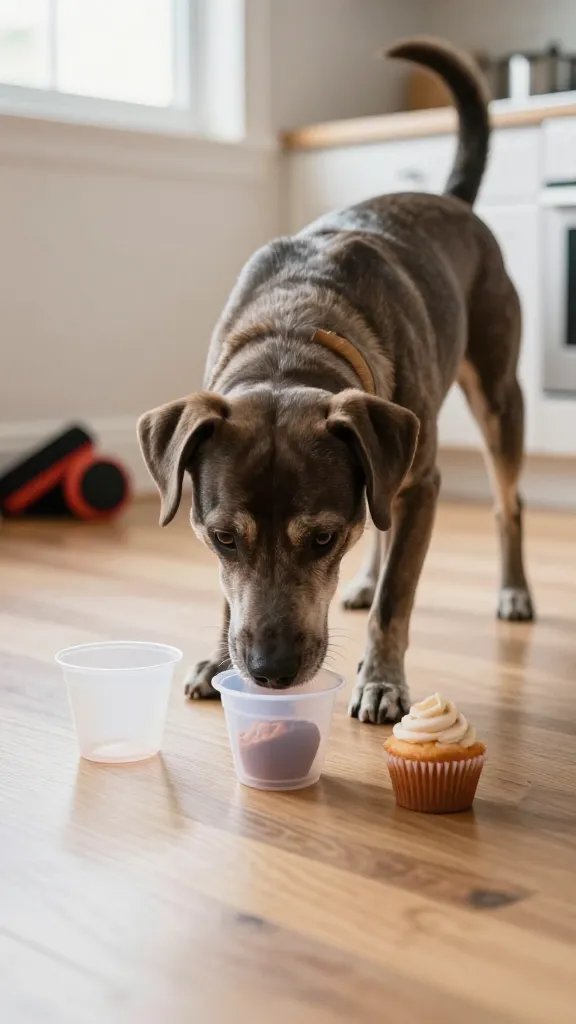
Three cups, one hidden treat, and a curious pup who loves a challenge. This is short, sweet, and endlessly repeatable.
What to know: It hones memory and focus while being a light mental workout.
Key Points:
- Use lightweight plastic cups
- Alternate which cup hides the treat
- Praise enthusiastically when they pick correctly
Practice session length: 5 to 10 minutes. You’ll notice faster decision making after a few rounds.
3. Tug, Tug, Then Think
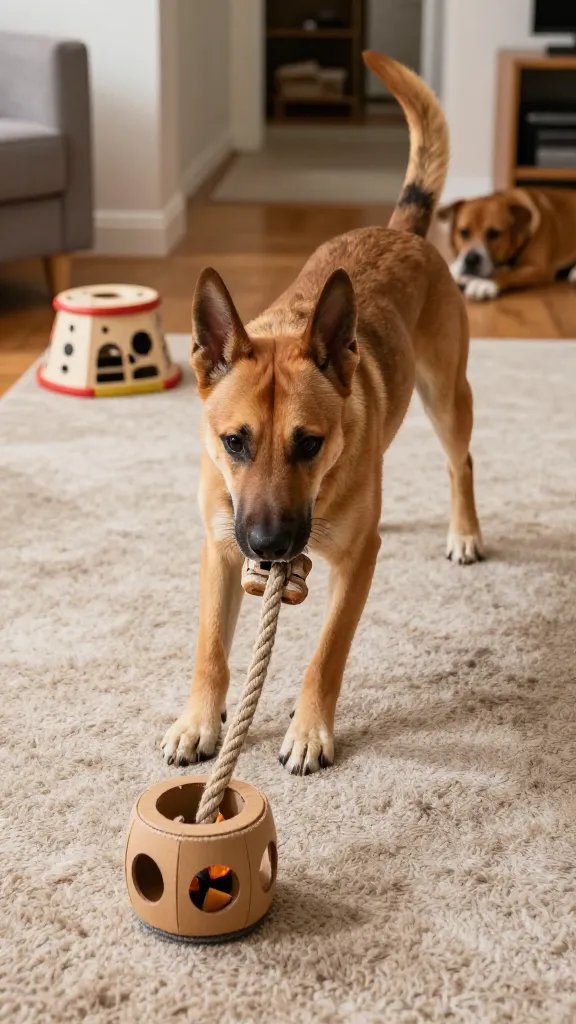
Combine a quick tug session with a mental puzzle to burn both body and brain. Tug helps release energy fast, then you slow things down with a puzzle.
Why mix it: It prevents over-arousal while teaching impulse control.
Suggested flow:
- 1 minute tug
- 30 seconds break with a puzzle or trick
- 2 minutes gentle walking and sniffing break
End with a calm down and a treat for staying focused. Seriously, your dog will thank you for the balance.
4. Shell Game on the Floor
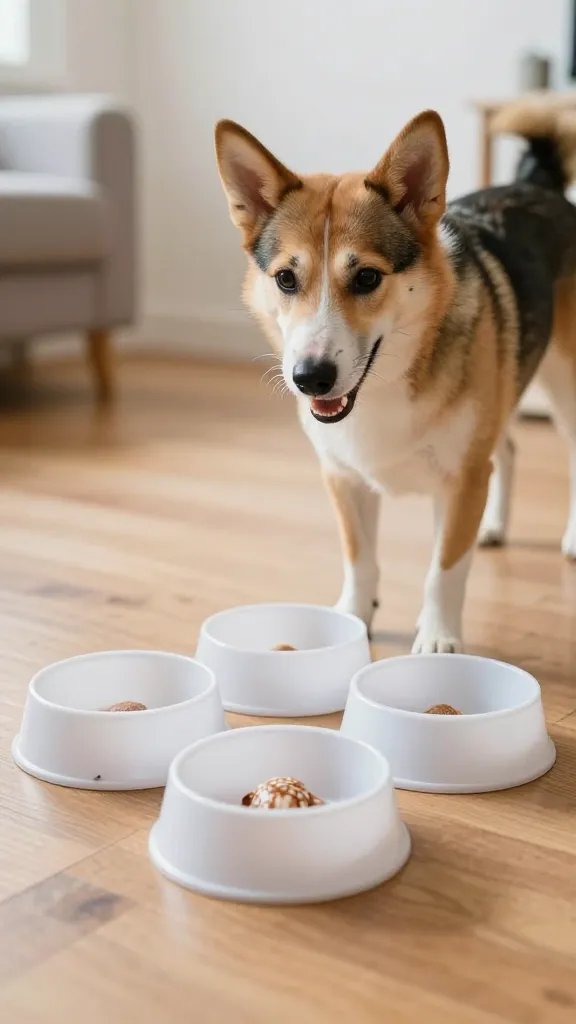
Take two or three containers and a treat. A little misdirection equals big brain work for your pup.
Why it helps: It reinforces problem solving and patience.
How to run it:
- Place a treat under one container while your dog watches
- Shuffle containers slowly
- Let your dog indicate the correct one for a reward
Chance of success grows with brief training, and your dog gains confidence every round.
5. Puzzle Box Surprise
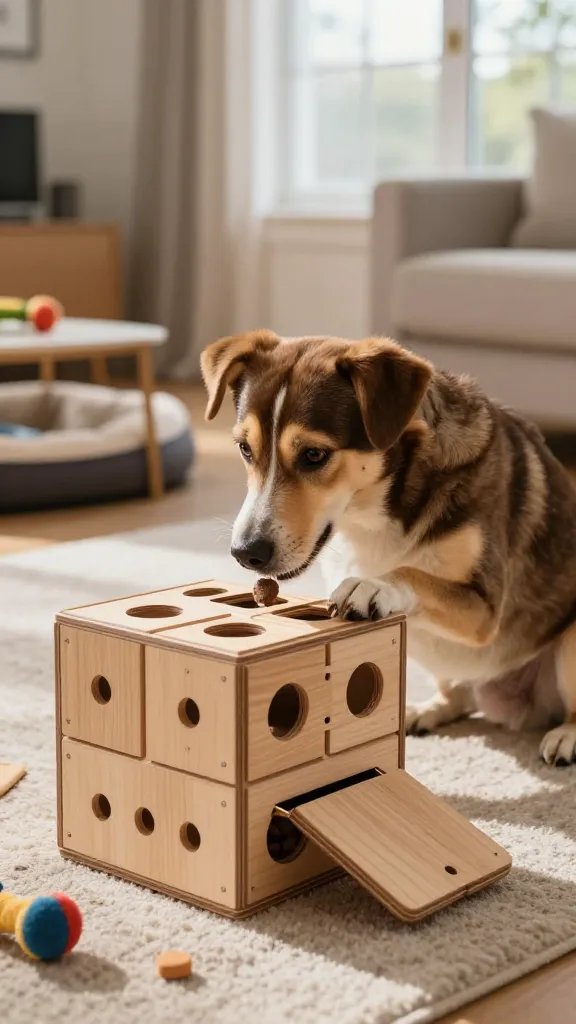
Use a treat-dispensing puzzle or a DIY box with compartments. The challenge is inside there somewhere, waiting to be uncovered.
What to expect: It teaches patience and leverages your dog’s curious nature.
Tips to optimize:
- Choose puzzles with adjustable difficulty
- Start with easy openings and progress to harder ones
- Keep sessions short to prevent frustration
Benefits show up as longer sustained focus during rest times.
6. Obedience Obstacle Dash
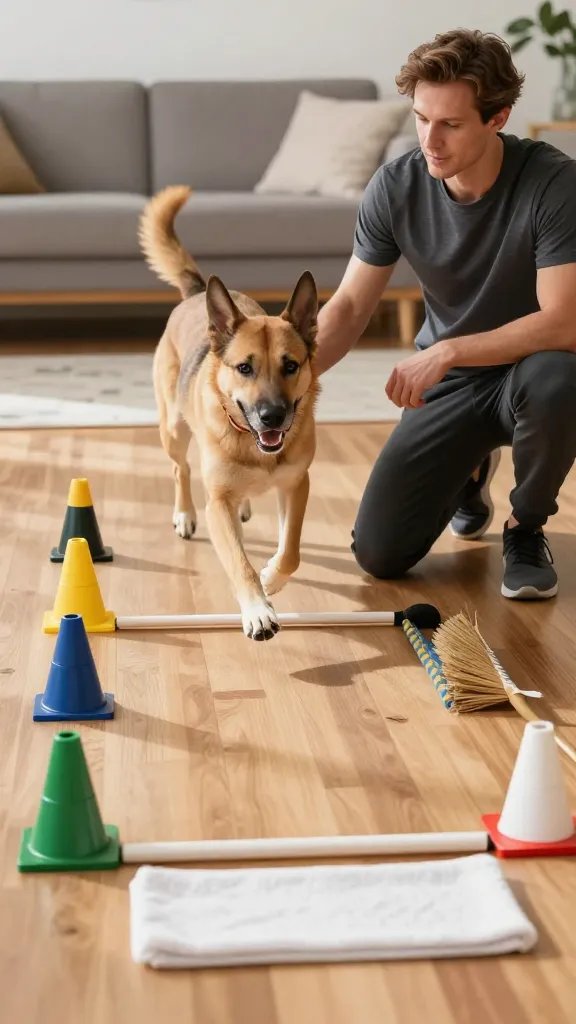
Create a mini obstacle course using household items. A quick sprint followed by a command teaches control and exertion in a controlled way.
Why this rocks: It builds confidence, body awareness, and listening under pressure.
Components you might use:
- Cones or books to mark a lane
- A broomstick as a low hurdle
- A mat or towel as a finish line cue
End with a calm cue like sit or down and a treat to reinforce good behavior after the run.
7. Sniff and Stomp Sensory Walk
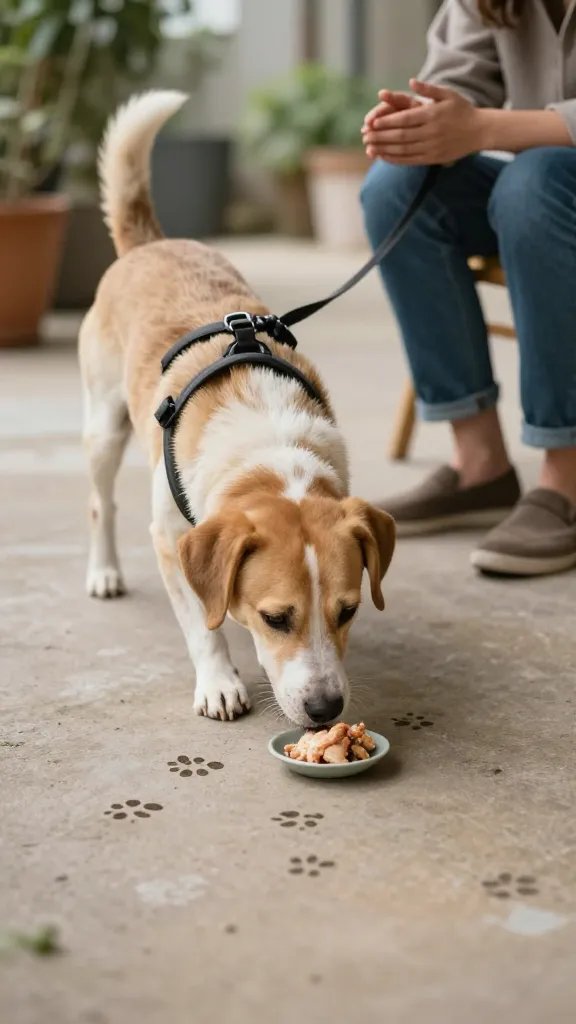
Put on a harness and take a slow, nose-first walk around the house or yard. Your dog gets to explore, while you stay present and calm.
Key benefit: It reduces stress by providing mental engagement and physical movement at a thoughtful pace.
How to use it:
- Choose interesting scents (mint, vanilla, pine, cooked chicken safely)
- Pause at scents, encourage a deliberate sniff
- Reward with a calm praise and optional treat
FYI this routine also helps with leash manners when you head outside.
8. Snuffle Mat Challenge
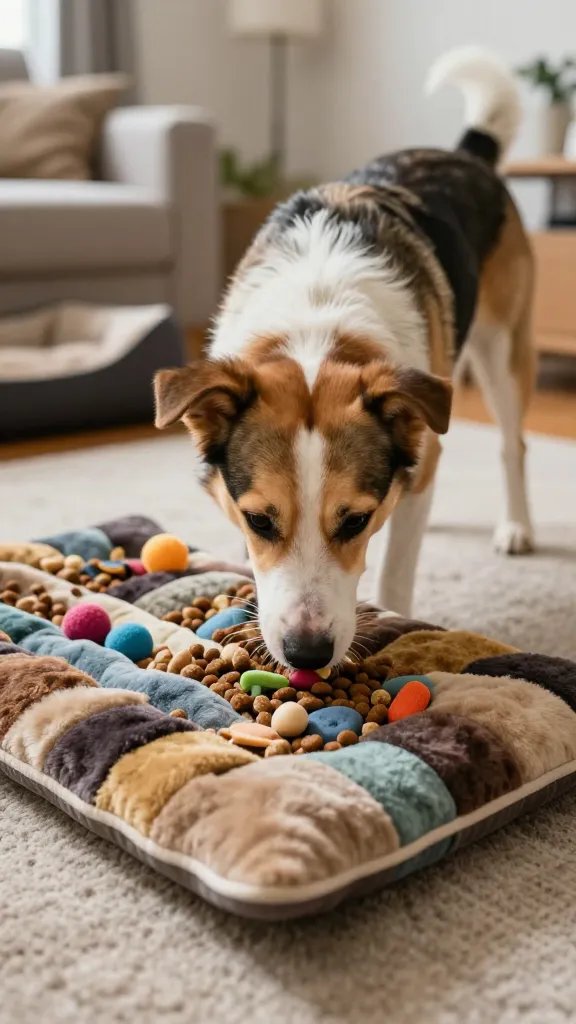
A snuffle mat hides kibble in fabric folds so your dog has to forage. It’s a glorious brain break that smells amazing.
Why it matters: Foraging appeals to natural instincts and provides slow, focused activity.
Tips to maximize:
- Hide treats at varying depths for extra effort
- Rotate flavors so curiosity stays high
- Move the mat to new rooms for novelty
Use during wind-down or after energy bursts to calm the mind.
9. DIY Treat Toss Target
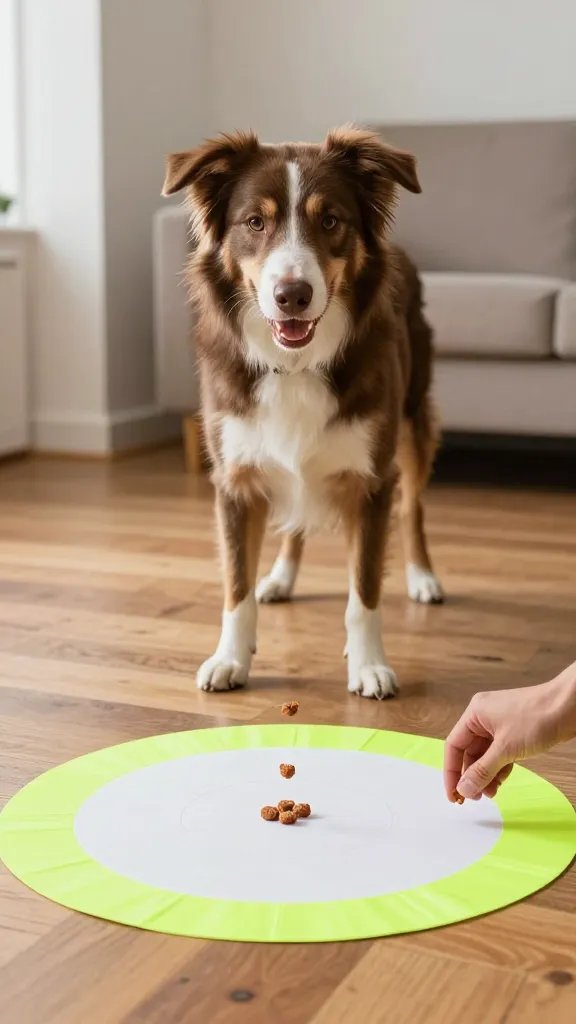
Mark a target on the floor with tape or a piece of paper and toss treats onto it. Your dog learns to aim and focus on a single point.
Why this works: It introduces goal oriented behavior and reduces aimless running.
What you’ll do:
- Place a bright target area
- Toss small treats onto the target from a few feet away
- Encourage a quick sit or quiet finish after each toss
As confidence grows, widen the distance and add a verbal cue like “touch” or “target.”
10. Cardboard Box Stash
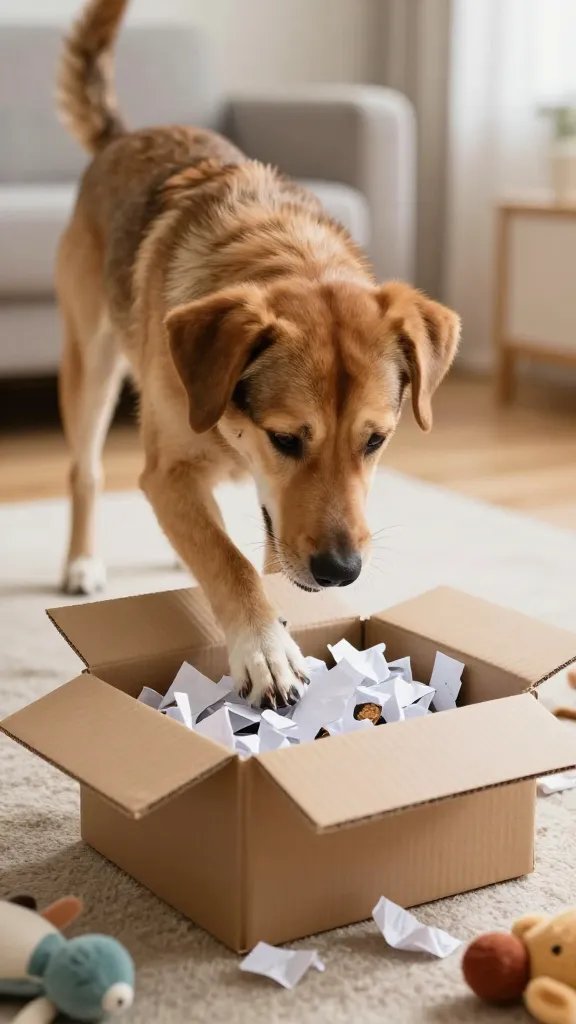
Fill a shallow box with paper crinkles and a few treats hidden inside. Your pup gets to sniff, dig, and problem solve to uncover rewards.
Best practice: Use a box with open sides so your dog can access easily and avoid getting frustrated.
What to include:
- 2 to 6 small treats
- A few soft toys to indicate distractions
- A mat underneath to catch crinkles
Keep sessions short to prevent overstimulation and build up to longer hunts over time.
11. Basket and Blanket Hideaway
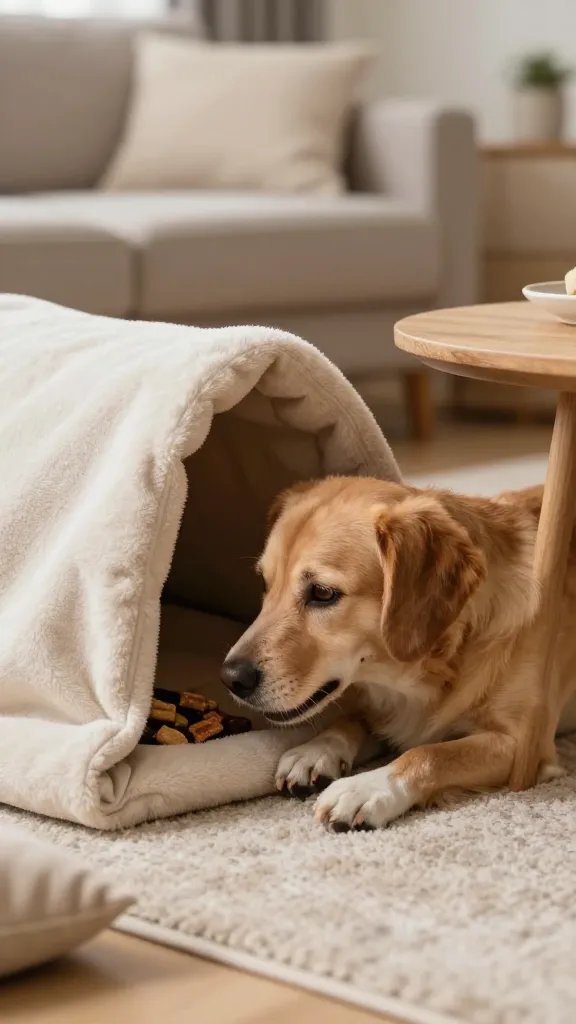
Fold a blanket into a small cave and tuck a treat inside. Your dog explores the “den” and uses sniffing to locate the treasure.
Why this is good: It satisfies nesting instincts and creates a cozy mental break.
How to introduce
- Place the blanket in a low-traffic corner
- Hide 1 or 2 treats inside folds
- Encourage with an excited voice and a cue like “find it”
Use regularly for a predictable, calming wind-down after playtime.
12. The Follow-the-Leader Rally
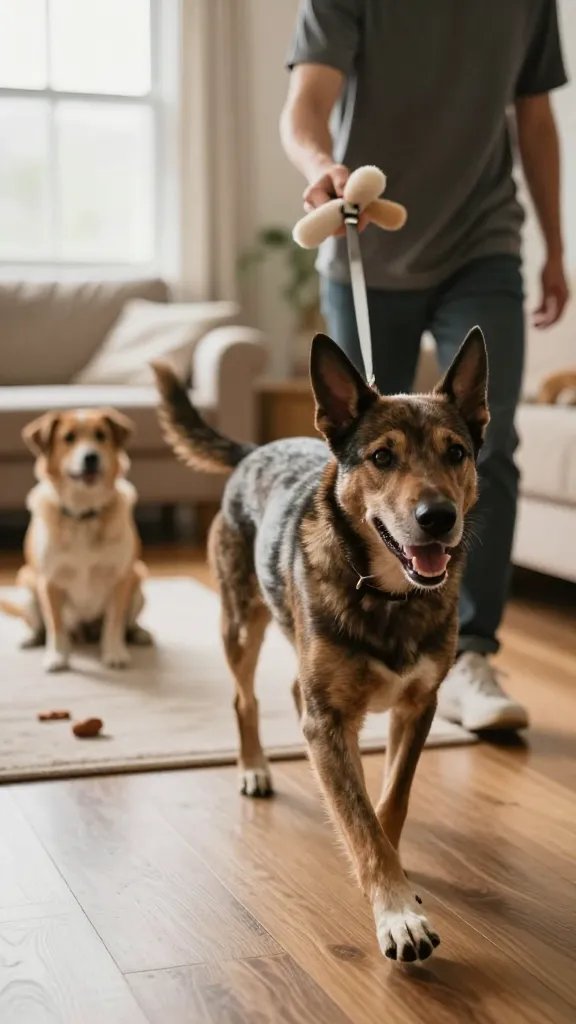
Lead your dog around the room with a favorite toy or treat. Change directions often to keep them attentive and engaged.
Benefits: It builds attentive following and strengthens your bond.
How to play:
- Walk at a comfortable pace
- Switch directions with a playful cue
- Lock in a quick sit when you reach a new spot
Finish with a settle on a mat and a small reward for listening well.
13. Word Game for Paws
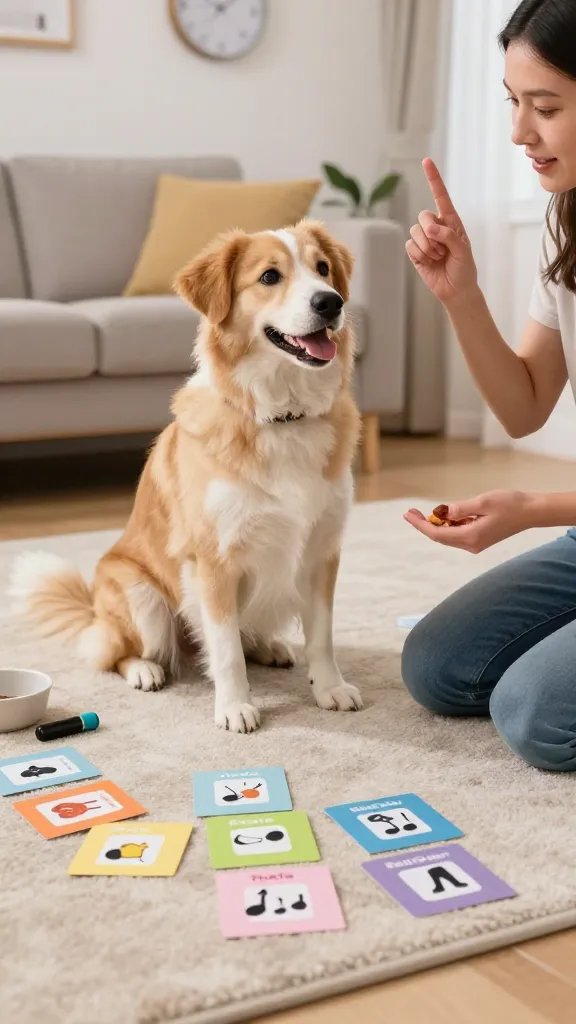
Teach your dog a couple of easy cues and incorporate a few new ones. The brain loves language and association. Yes, it can be cute and functional.
What to train: Sit, stay, shake, roll over, or any trick your dog enjoys.
Quick structure:
- Choose 3 simple cues
- Practice 2 minutes per cue, then mix them up
- Reward accuracy with a tasty treat or affection
IMO consistency is your best friend here, so keep a regular practice schedule.
14. Toy Rotation Mystery Box
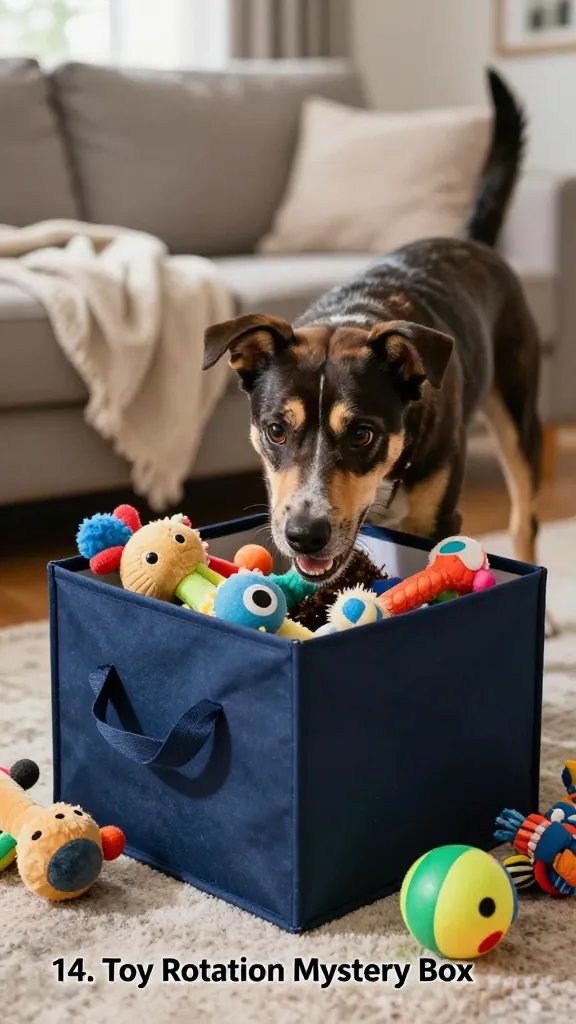
Hide a couple new or favorite toys within a box and let your dog dig around to find them. This keeps novelty high and boredom low.
Why rotate: It maintains curiosity and provides a mental workout without changing your setup drastically.
Setup tips:
- Keep 3 to 5 interchangable toys in the rotation
- Hide 1 favorite toy inside a lightweight box
- Swap in after a short play session to reset interest
Observe how quickly your dog tunes into the new challenge each time.
15. Calm-Down Card Deck
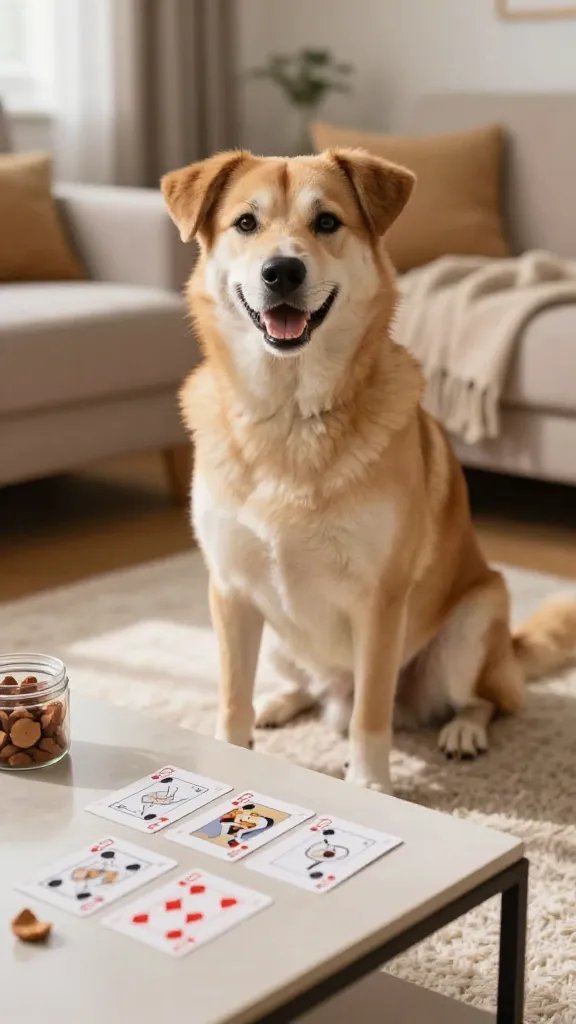
End with a tiny card deck of cues that guide your dog from high energy to relaxed, ready for rest or a cuddle session.
Structure: Use 4 to 6 cards with cues like “look at me,” “touch,” “settle,” or “down.”
How to use:
- Flip a card and perform the cue with your dog
- Give a brief reward after each successful cue
- Repeat until your dog shows calm energy and relaxed breathing
Great way to finish on a high note and transition to quiet time.
Seriously, there are so many ways to channel your dog’s energy into smart, happy play. FYI, you don’t need fancy gear to get results, just a little creativity and consistency.
Now that you have a dozen ideas and a few backups, you’re ready to mix and match according to your dog’s mood and your space. Trust me, a little brain work goes a long way toward a calmer, more focused pup and a happier household.
Time to pick a few favorites, set a tiny schedule, and watch the magic happen. You’ve got this — your hyperactive buddy is about to become a master co-pilot in your daily routine.