
Best Fertilizer for Tomato Plants: A Grower’s Guide to Bigger, Healthier Harvests
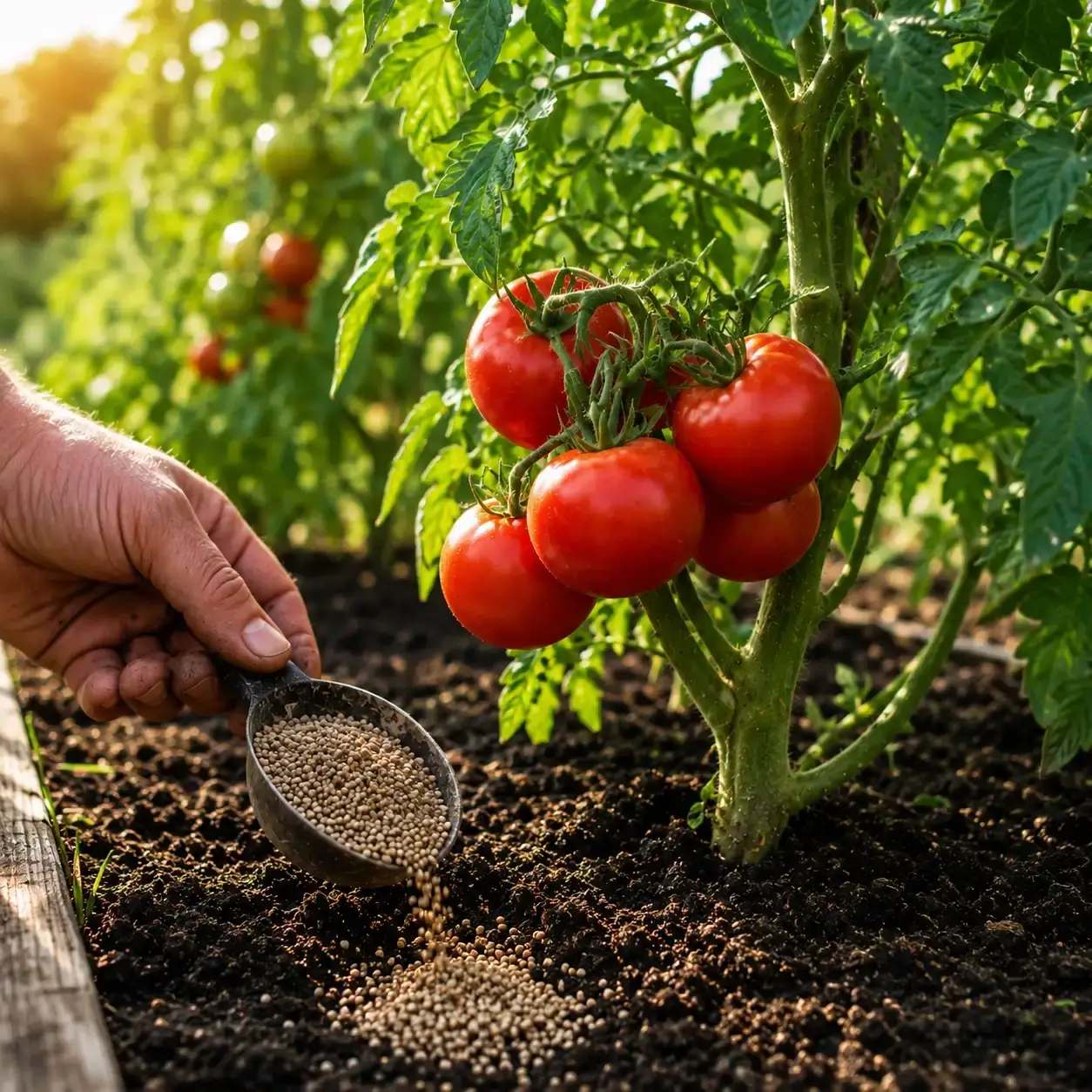
If you’ve ever stood in the fertilizer aisle staring at a wall of bags and bottles, wondering why your tomato plants keep producing more leaves than fruit, you’re not alone. I’ve been growing tomatoes and writing about soil health for over fifteen years, and the question I get asked more than any other is simple: what’s actually the best fertilizer for tomato plants?
The honest answer is that there isn’t one single “best” product — there’s a best approach. Tomatoes are heavy feeders with specific nutritional needs that change as they move from seedling to flowering to fruiting. Get the ratios wrong, and you’ll end up with a jungle of green foliage and disappointingly few tomatoes. Get it right, and you’ll be swimming in Brandywines, Romas, or Cherokee Purples by mid-summer.
This guide breaks down exactly what tomatoes need, when they need it, and which fertilizers actually deliver — based on soil chemistry, not marketing copy.
Why Tomato Plants Are Such Demanding Feeders
Tomatoes (Solanum lycopersicum) are fast-growing, fruit-heavy plants that pull an enormous amount of nutrients from the soil in a single growing season. Unlike leafy greens or herbs, which mostly need nitrogen, tomatoes require a shifting balance of three primary macronutrients — nitrogen (N), phosphorus (P), and potassium (K) — plus a supporting cast of secondary nutrients like calcium, magnesium, and sulfur, along with micronutrients such as boron, zinc, and manganese.
Each nutrient plays a distinct role:
- Nitrogen fuels leafy, vegetative growth. Necessary early on, but excess nitrogen later in the season leads to lush foliage at the expense of fruit set.
- Phosphorus supports root development and flowering. Plants low in phosphorus often show stunted growth and poor blossom formation.
- Potassium governs fruit development, disease resistance, and overall plant vigor. Tomatoes particularly crave potassium during the fruiting stage.
- Calcium prevents blossom end rot, the sunken, dark lesion that ruins otherwise healthy tomatoes.
- Magnesium is central to chlorophyll production; a deficiency shows up as yellowing between leaf veins.
Understanding this nutrient hierarchy is the foundation for choosing the right fertilizer — and for knowing when to change course as the season progresses.
Reading the Fertilizer Label: What N-P-K Numbers Actually Mean
Every fertilizer bag displays three numbers, something like 10-10-10 or 5-10-10. These represent the percentage by weight of nitrogen, phosphorus, and potassium, in that exact order.
For tomatoes, the ideal ratio shifts depending on growth stage:
- Early growth (transplant stage): A balanced formula or one slightly higher in phosphorus, such as 5-10-5 or 10-10-10, helps establish strong roots.
- Flowering and fruiting stage: Lower nitrogen, higher phosphorus and potassium — something like 3-4-6 or 5-10-10 — encourages blossoms to set fruit rather than pushing more leaf growth.
This is the single biggest mistake I see backyard gardeners make: sticking with a high-nitrogen, all-purpose fertilizer straight through the season. It produces gorgeous, dark green plants that stubbornly refuse to fruit.
Top Fertilizer Options for Tomato Plants
1. Organic Compost and Aged Manure
Nothing beats well-rotted compost or aged manure as a soil foundation. It improves soil structure, feeds beneficial microbes, and releases nutrients slowly over the season. Compost alone rarely provides enough concentrated nutrition for heavy fruiting, but as a base layer worked into the soil before planting, it’s unmatched for long-term soil health.
Best for: Building healthy soil biology and improving water retention.

2. Bone Meal
Rich in phosphorus and calcium, bone meal is a favorite among organic growers for encouraging strong root systems and reducing the risk of blossom end rot. It’s a slow-release amendment, best mixed into the planting hole at transplant time.
Best for: Root establishment and calcium supplementation.

3. Fish Emulsion
A fast-acting, nitrogen-rich liquid fertilizer derived from fish byproducts. Fish emulsion is excellent for young tomato plants that need a quick nutrient boost, though its strong nitrogen content means it should be used sparingly once flowering begins.
Best for: Early-season growth and quick green-up.

4. Epsom Salt (Magnesium Sulfate)
Not technically a fertilizer in the traditional sense, but a valuable magnesium and sulfur supplement. Tomato growers have used diluted Epsom salt for generations to correct yellowing leaves and support chlorophyll production, especially in magnesium-deficient soils.
Best for: Correcting magnesium deficiency, identifiable by yellowing between leaf veins.
5. Calcium Nitrate
For gardeners battling blossom end rot despite consistent watering, calcium nitrate delivers calcium directly and quickly. It also provides a modest nitrogen boost, making it useful during active fruit development.
Best for: Preventing and correcting blossom end rot.
6. Balanced Synthetic Granular Fertilizers (e.g., 10-10-10)
Synthetic granular fertilizers offer precise, measurable nutrient ratios and are widely available. They act faster than organic amendments and are useful for gardeners who want predictable, controlled feeding schedules.
Best for: Gardeners who want consistency and fast results.
7. Tomato-Specific Fertilizers (Low-N, High-P/K Blends)
Many garden brands now sell fertilizers formulated specifically for tomatoes, typically with ratios like 4-6-8 or 3-4-6. These are formulated around the exact nutrient shift tomatoes need once flowering starts, and they often include added calcium and magnesium.
Best for: Simplifying the guesswork — one product designed around tomato physiology specifically.
A Simple Feeding Schedule That Works
Rather than guessing, follow a nutrient timeline built around the plant’s actual growth stages:
- At planting: Mix compost, aged manure, or bone meal into the planting hole to establish healthy roots.
- 2–3 weeks after transplant: Apply a balanced fertilizer to support vegetative growth.
- At first flowering: Switch to a lower-nitrogen, higher-phosphorus and potassium formula to encourage fruit set.
- Throughout fruiting: Feed every 2–3 weeks with a potassium-rich fertilizer, and watch for calcium deficiency symptoms.
- Late season: Reduce nitrogen further to avoid pushing new foliage growth as the plant focuses energy on ripening existing fruit.
Consistency matters more than any single “miracle” product. Tomatoes respond best to steady, appropriately timed feeding rather than infrequent heavy doses.
Common Mistakes That Sabotage Tomato Harvests
- Over-fertilizing with nitrogen. Leads to “all leaf, no fruit” syndrome.
- Ignoring soil pH. Tomatoes prefer a slightly acidic soil pH between 6.2 and 6.8. Outside this range, nutrients become less available to the plant regardless of how much fertilizer you apply.
- Inconsistent watering combined with calcium deficiency. This combination is the leading cause of blossom end rot, not just a lack of calcium in the soil.
- Fertilizing without a soil test. Guessing wastes money and can create nutrient imbalances that are harder to fix than a simple deficiency.
Organic vs. Synthetic: Which Should You Choose?
This is less of a battle than gardening forums make it out to be. Organic fertilizers — compost, manure, bone meal, fish emulsion — improve long-term soil health, feed microbial life, and release nutrients gradually. Synthetic fertilizers offer speed, precision, and convenience.
Many experienced growers, myself included, use both: organic matter to build a resilient soil foundation, and targeted synthetic or liquid feeds to correct specific deficiencies or give plants a boost during critical growth windows. There’s no purity test to pass here — the goal is a productive, healthy tomato plant.
Final Thoughts
The best fertilizer for tomato plants isn’t a single product you can pick off a shelf and forget about. It’s a strategy: rich, well-prepared soil as the foundation, a nitrogen-to-phosphorus-to-potassium ratio that shifts with the plant’s growth stage, and attentiveness to calcium and magnesium along the way. Whether you lean organic, synthetic, or a blend of both, the plants themselves will tell you what they need — yellowing leaves, leggy growth, or stalled flowering are all signals worth paying attention to.
Feed thoughtfully, watch closely, and your tomato plants will reward you with the kind of harvest that makes all the aisle-standing and label-reading worth it.