19 Calm Bedroom Ideas for Better Sleep and Relaxation
A calm bedroom is more than just a design choice—it directly affects how well you sleep and how relaxed you feel at the end of the day. In 2026, bedroom design focuses on creating peaceful environments that reduce stress, limit visual noise, and support deep rest. Soft colors, thoughtful lighting, and intentional layouts play a major role in this shift. Calm bedrooms are not about trends, but about balance, comfort, and simplicity. These ideas will help you turn your bedroom into a soothing retreat that truly supports rest and relaxation.
1. Choose a Soft, Muted Color Palette
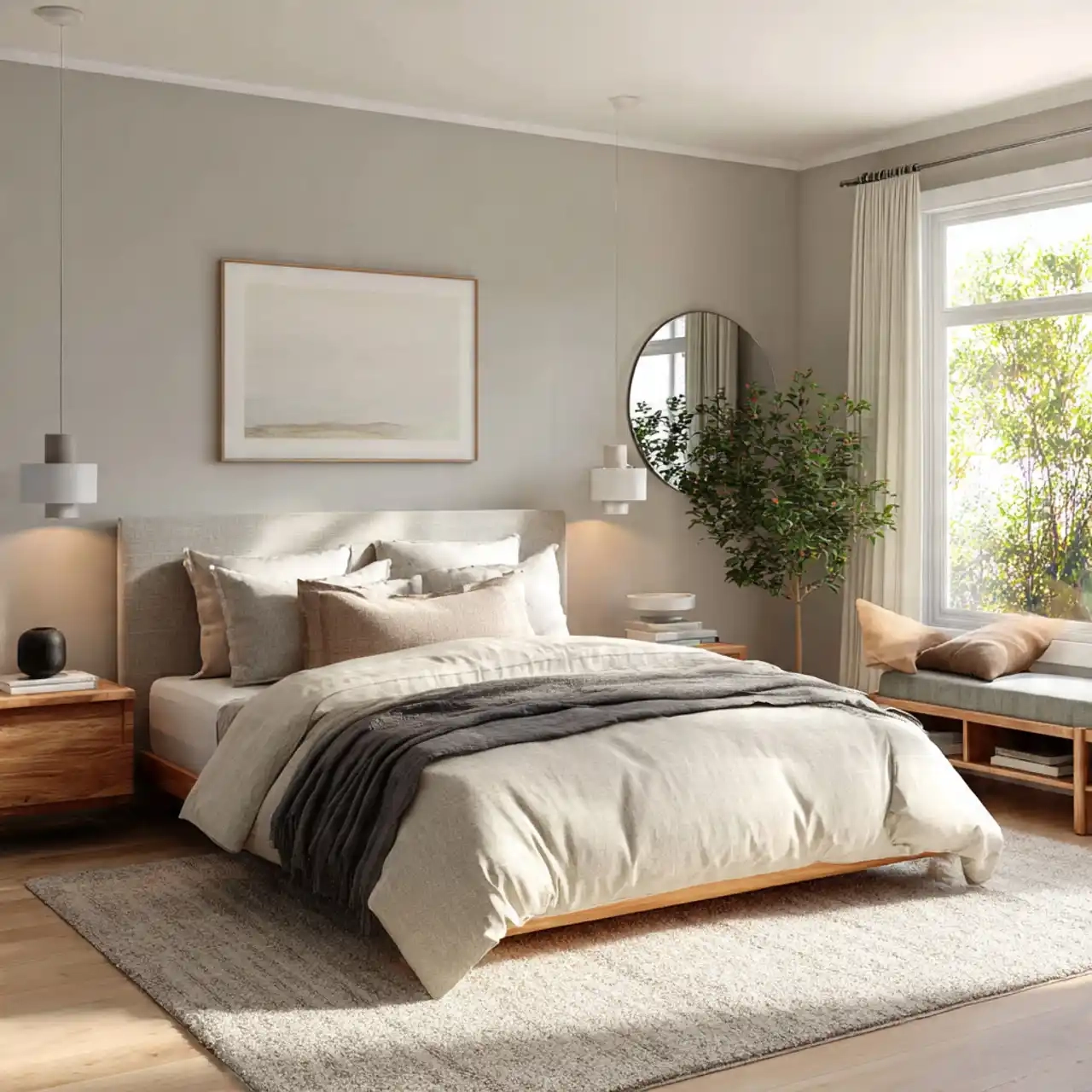
Soft, muted colors instantly calm the mind. Shades like warm beige, soft gray, muted green, and gentle taupe help reduce visual stimulation. These tones create a relaxing backdrop that feels comforting rather than cold. A calm palette also makes the space feel cohesive and balanced.
Tip: Avoid bright or high-contrast colors near the bed.
2. Keep the Bedroom Clutter-Free
Clutter creates mental noise, even when you are not aware of it. A tidy bedroom feels more open and calming. Limiting visible items helps the brain relax faster at night. Storage solutions play a key role in maintaining calm.
Tip: Keep bedside surfaces as clear as possible.
3. Invest in Comfortable, Quality Bedding
Comfortable bedding directly affects sleep quality. Soft sheets, breathable fabrics, and supportive pillows make a noticeable difference. Hotels focus on bedding for a reason—it enhances rest. Quality materials also feel more soothing against the skin.
Tip: Choose natural fabrics like cotton or linen.
4. Use Warm, Low Lighting
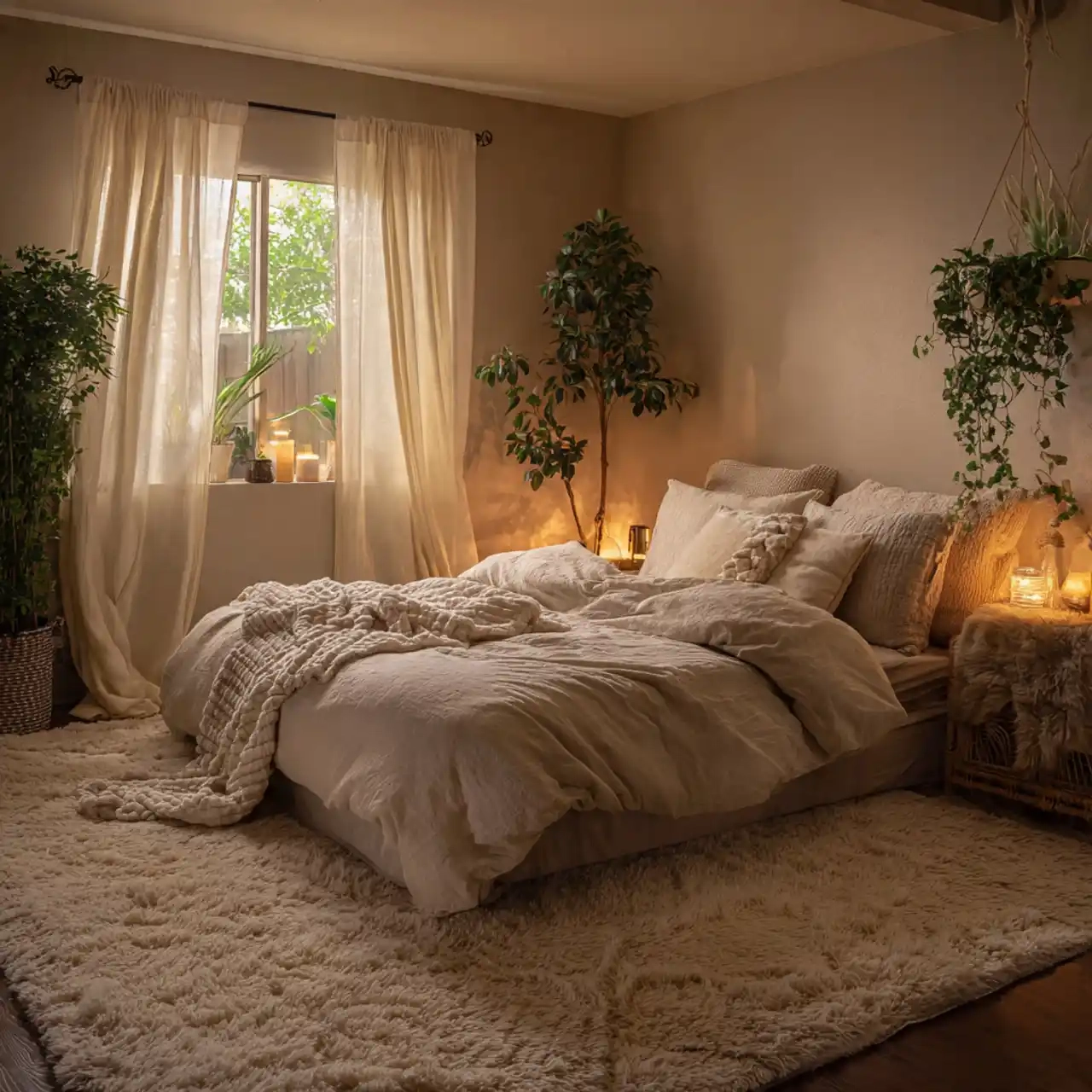
Harsh lighting disrupts relaxation. Warm, soft lighting creates a cozy and peaceful atmosphere. Layered lighting allows you to adjust brightness based on time of day. This supports a healthy sleep routine.
Tip: Use lamps instead of bright overhead lights at night.
5. Add Soft Textures for Comfort
Textures add warmth without adding clutter. Rugs, throws, and upholstered furniture make the room feel inviting. Soft textures absorb sound and improve comfort. This creates a cocoon-like environment ideal for sleep.
Tip: Mix different textures in the same color family.
6. Limit Technology in the Bedroom
Electronics can interfere with sleep quality. Screens emit light that affects melatonin production. Reducing technology helps the bedroom feel calmer and more intentional. A tech-free space promotes deeper rest.
Tip: Keep phones off the nightstand if possible.
7. Use Neutral Window Treatments
Light, neutral curtains soften natural light. They help maintain privacy while keeping the room bright during the day. Simple window treatments reduce visual distractions. This supports a relaxed atmosphere.
Tip: Choose blackout linings for better sleep.
8. Keep Decor Minimal and Meaningful
Too much decor can overwhelm the senses. Calm bedrooms focus on a few meaningful pieces. This approach creates a peaceful environment without feeling empty. Every item should have a purpose.
Tip: Remove decor that does not add comfort or calm.
9. Choose a Comfortable Mattress
A supportive mattress is essential for good sleep. Comfort should always come before style. The right mattress reduces physical tension and improves rest. This is the foundation of a calm bedroom.
Tip: Replace mattresses that no longer provide support.
10. Incorporate Natural Elements
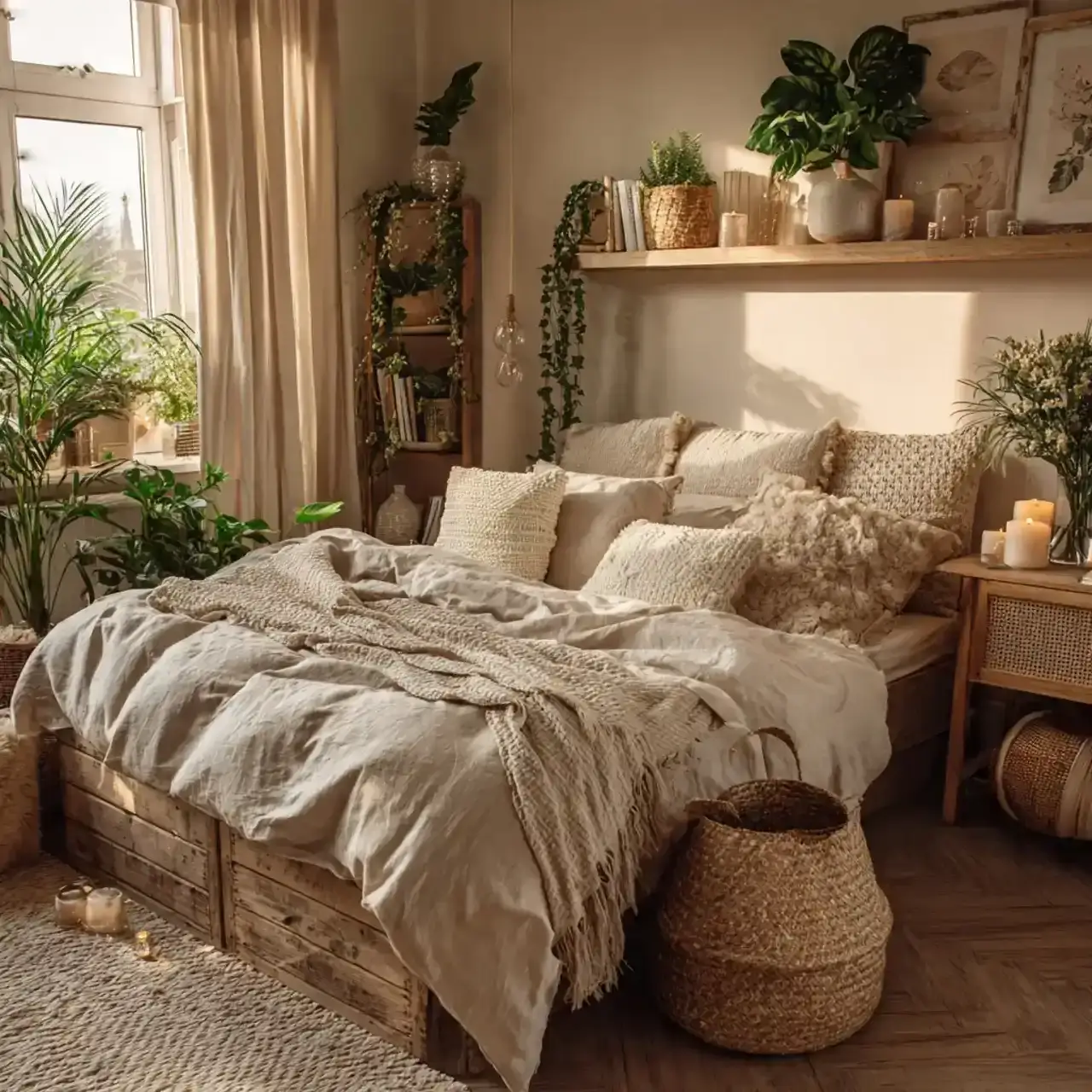
Natural materials help ground the space. Wood, linen, stone, and plants bring warmth and balance. These elements connect the bedroom to nature, promoting calm. Natural textures feel soothing and timeless.
Tip: Add one or two low-maintenance plants.
11. Keep Furniture Simple
Simple furniture designs reduce visual clutter. Clean lines and minimal detailing feel calming. Overly ornate furniture can feel heavy in a restful space. Simplicity supports relaxation.
Tip: Avoid bulky or oversized pieces.
12. Use Soft Scents to Relax
Scent plays a powerful role in relaxation. Subtle fragrances like lavender, sandalwood, or linen help calm the nervous system. Light scents enhance the sleep environment. This small detail makes a big impact.
Tip: Use diffusers or candles sparingly.
13. Create Visual Balance
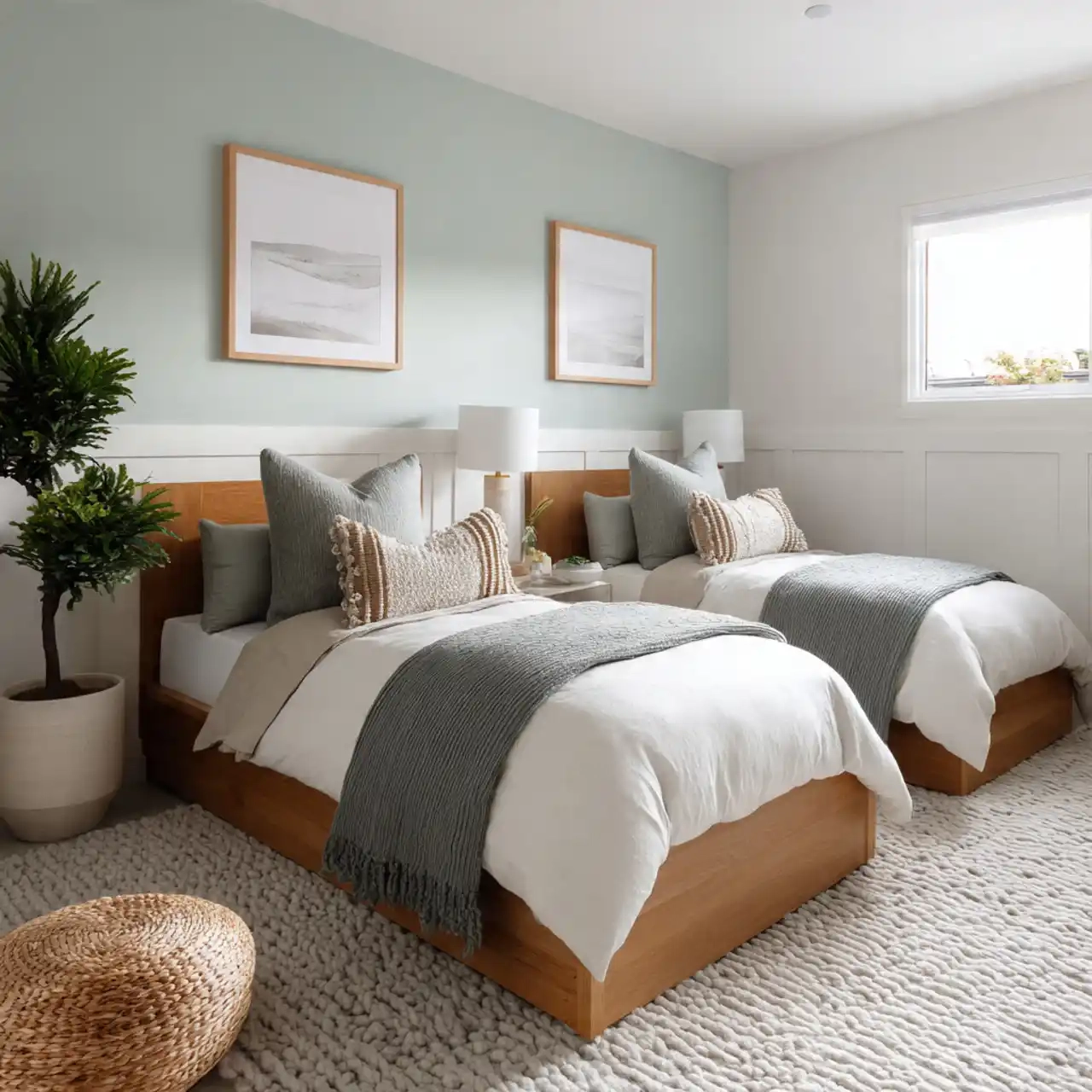
Balance in layout helps the room feel peaceful. Symmetrical arrangements feel stable and calming. Balanced design reduces subconscious tension. This is why hotels rely on symmetry.
Tip: Match bedside tables or lamps where possible.
14. Keep Wall Art Simple and Calm
Artwork influences mood more than we realize. Calm themes like landscapes or abstract designs work best. Avoid busy or loud imagery. Art should support relaxation, not distract from it.
Tip: Use soft, neutral tones in artwork.
15. Maintain Good Air Quality
Fresh air improves sleep quality. Proper ventilation helps regulate temperature and comfort. Clean air supports deeper rest and relaxation. This is often overlooked in bedroom design.
Tip: Open windows daily if possible.
16. Use Rugs to Reduce Noise
Rugs soften sound and make the bedroom quieter. A quieter room feels more peaceful. Rugs also add warmth and comfort underfoot. This supports a restful environment.
Tip: Choose plush or medium-pile rugs.
17. Keep the Color Scheme Consistent
Too many colors create visual chaos. A consistent color scheme helps the brain relax. This makes the room feel cohesive and intentional. Calm bedrooms rely on harmony.
Tip: Stick to two or three main tones.
18. Add a Comfortable Seating Option
A chair or bench adds function without clutter. It provides a place to unwind or prepare for bed. Seating makes the bedroom feel complete. Comfort is key.
Tip: Choose upholstered seating for softness.
19. Style with Intention, Not Excess
Calm bedrooms are carefully edited. Less is more when it comes to rest. Intentional styling keeps the space peaceful. Removing unnecessary items enhances relaxation.
Tip: Regularly reassess what truly belongs in the room.
Conclusion
A calm bedroom supports both better sleep and overall well-being. By focusing on comfort, simplicity, and thoughtful design, you can create a space that truly helps you relax. These ideas show that peace comes from balance, not excess. Small changes can have a powerful effect on how you rest. A calm bedroom is an investment in better sleep and a healthier routine.