35 Brilliant Decluttering Hacks That Actually Transform Your Home Fast
Clutter creeps into our lives silently, accumulating in drawers, closets, and corners until our homes feel chaotic and overwhelming. If you’re drowning in stuff and don’t know where to start, you’re not alone. The good news is that decluttering doesn’t require weeks of effort or expensive organizing systems. With the right strategies and simple hacks, you can transform your space quickly and maintain that peaceful, organized feeling long-term.
These proven decluttering tips come from real experience—methods that work for busy people with real lives, not Instagram-perfect homes that don’t reflect reality. Whether you’re tackling a single junk drawer or an entire house, these practical hacks will help you make progress without feeling overwhelmed.
Why Traditional Decluttering Methods Often Fail
Most people start decluttering with good intentions but give up quickly. They pull everything out of closets, create enormous piles, and then feel paralyzed by the magnitude of decisions ahead. Or they buy expensive organizing containers before actually reducing what they own, ending up with beautifully organized clutter.
The key to successful decluttering is starting small, making quick decisions, and building momentum. You need systems that work with your natural habits rather than requiring constant willpower. The hacks below focus on simplicity and sustainability—creating lasting change rather than temporary tidiness.
Start with the Easy Wins
Begin your decluttering journey with items that require minimal emotional attachment or decision-making. Expired pantry items, old magazines, broken things you’ve been meaning to fix, worn-out towels, and clothes that don’t fit—these are easy eliminations that build confidence and create visible progress quickly.
Spend just fifteen minutes clearing obvious trash and expired items from one room. You’ll be amazed how much lighter the space feels immediately. This quick win provides motivation to tackle more challenging areas later.
The Box Method for Quick Decision-Making
Set up three boxes or bags in the area you’re decluttering: Keep, Donate, and Trash. As you handle each item, make an immediate decision and place it in the appropriate container. No “maybe” pile allowed—that’s where clutter goes to hide.
The physical act of sorting into containers forces decisive action. If you hesitate for more than five seconds on an item, it probably doesn’t add enough value to your life. When in doubt, let it go. You can always repurchase essential items if needed, but you’ll rarely miss what you donate.
The Hanger Trick for Closet Clarity
Turn all your clothing hangers backward in your closet. As you wear items and return them clean, flip the hanger forward. After three months, everything still hanging backward hasn’t been worn. These are prime candidates for donation—you’re clearly not using them.
This method provides concrete data about your actual clothing usage rather than emotional attachment or aspirational thinking. It’s eye-opening to see how much of your wardrobe sits untouched while you wear the same favorites repeatedly.
The Four-Box Room Method
When tackling an entire room, use four labeled boxes: Keep Here, Relocate, Donate, and Trash. Work systematically through the space, making quick decisions about each item. Things that belong in other rooms go in the Relocate box to be distributed later in one trip.
This prevents the common mistake of running items to other rooms mid-declutter, which breaks your momentum and wastes time. Stay focused on the current space until it’s complete, then redistribute relocate items efficiently.
The One-In-One-Out Rule
Implement this simple maintenance rule: every time something new enters your home, something similar must leave. Buy a new shirt? Donate an old one. New book arrives? Pass along one you’ve finished reading. This prevents clutter from accumulating again.
This rule works because it makes you conscious of what you’re bringing into your space. You’ll naturally become more selective about purchases when you know something must go to make room. It’s preventative decluttering that stops problems before they start.
Digitize Paper Clutter Immediately
Paper is one of the biggest clutter culprits in modern homes. Use your phone to photograph or scan important documents, then shred or recycle the originals. Set up a simple filing system on your computer or cloud storage with clear categories.
For ongoing paper, handle each piece only once. Mail comes in, gets opened immediately, and is either acted upon, filed digitally, or recycled—no piles on counters. This single habit eliminates most paper clutter permanently.
The 12-12-12 Challenge
Set a timer and find twelve items to throw away, twelve to donate, and twelve to return to their proper homes. This quick challenge takes about twenty minutes but makes noticeable impact. The specific numbers create a game-like motivation that’s more engaging than vague decluttering goals.
Repeat this challenge weekly or whenever you feel clutter creeping back. The defined endpoint makes it less overwhelming than open-ended organizing sessions that can consume entire days.
Declutter by Category, Not Location
Instead of tackling a room at a time, gather all items of one category throughout your home. Collect every book, every pen, every mug, every piece of Tupperware. Seeing the full volume of what you own in one category is shocking and makes it easier to identify excess.
When all your coffee mugs are spread across the table, it becomes obvious you don’t need twenty-five of them. This category approach reveals duplicates and helps you keep only the best versions of each item type.
The Maybe Box Compromise
For items you genuinely can’t decide about, place them in a sealed box labeled with today’s date. Store it out of sight for six months. If you haven’t opened the box to retrieve anything during that time, donate the entire box unopened without looking inside.
This method works because it removes decision paralysis while providing safety for uncertain choices. In practice, most people forget what’s even in the box—proof they didn’t need those items.
Apply the 80-20 Rule
We typically use twenty percent of our belongings eighty percent of the time. The other eighty percent of our stuff gets used rarely or never. Identify your twenty percent—the clothes you actually wear, the dishes you use daily, the tools you reach for regularly—and question everything else.
This perspective shift helps you see how much you’re storing and maintaining for hypothetical future needs that rarely materialize. Keep what you actively use and love, not what you might possibly need someday.
The Trash Bag Tango
Walk through your home with a large trash bag and quickly grab obvious garbage, broken items, and things beyond repair. Don’t overthink—just collect trash for fifteen minutes. You’ll be surprised how much accumulates in rarely-checked drawers and cabinets.
This quick sweep creates immediate improvement and makes subsequent decluttering easier when you’re not wading through literal garbage mixed with items worth keeping.
Digitize Sentimental Items
Sentimental clutter is the hardest to release, but you can keep memories without keeping every physical object. Photograph sentimental items before donating them. Create a digital album of childhood artwork, old letters, or mementos.
The memory lives on in the photo, but you’re not storing boxes of items you never look at. For truly special pieces, keep just one or two favorites and release the rest guilt-free.
The Donation Station
Designate a permanent spot in your home—a basket, bin, or bag—as an ongoing donation station. When you notice something you no longer need while going about daily life, immediately place it in the donation station instead of returning it to its spot.
When the container is full, immediately drop it at a donation center. This system captures those small decluttering moments throughout the week without requiring dedicated decluttering sessions.
The Container Concept
Let your storage containers limit what you keep. Own only as many clothes as fit comfortably in your dresser and closet. Keep only as many kitchen gadgets as fit in your designated drawer. When the container is full, something must go before anything new enters.
This creates natural boundaries and prevents the endless acquisition that requires buying more storage solutions. The container becomes the decision-maker, removing emotion from the process.
Declutter During Commercial Breaks
If you watch television, use commercial breaks for quick decluttering bursts. In two to three minutes, you can clear a countertop, organize a drawer, or sort through a magazine pile. These micro-sessions add up without feeling like major time investments.
The time-bound nature prevents perfectionism and overthinking. You simply do what you can in the available time, then stop. Multiple short sessions often accomplish more than rare marathon organizing days.
Apply the One-Year Rule
If you haven’t used something in a year, you probably don’t need it. There are exceptions—holiday decorations, seasonal sports equipment—but for most items, a full year of non-use indicates you can live without it.
Be honest with yourself about seasonal items versus things you’re keeping “just in case.” True seasonal items get used predictably. Everything else is taking up space without providing value.
The Surface Clear Challenge
Challenge yourself to clear all surfaces before bed each night. Kitchen counters, dining tables, bathroom vanities, nightstands—nothing lives on surfaces overnight except perhaps a lamp or intentional decor.
This daily habit prevents clutter from accumulating and gives you a fresh start each morning. Surfaces with nothing on them naturally discourage dumping new items there—emptiness begets organization.
Declutter Before Organizing
Never buy storage solutions before decluttering. You’ll inevitably purchase the wrong size or end up organizing things you should have eliminated. First reduce what you own, then organize what remains with appropriate storage.
Most people discover they don’t need any new storage once they’ve actually decluttered. The items they kept fit perfectly in existing spaces without elaborate organizing systems.
The Five-Minute Pick-Up
Set a timer for five minutes and speed-clean any room, returning items to their proper homes as fast as possible. Make it a game to beat your previous time. This quick reset prevents daily clutter from becoming overwhelming.
Five minutes is short enough to do daily without resentment but long enough to make real impact. Done consistently, this habit maintains order with minimal effort.
Apply the Gift Rule Reversal
Stop keeping things solely because they were gifts. The gift was given with love, and that love doesn’t disappear when you donate an item you don’t use. The giver would want you to have a peaceful, clutter-free home more than they’d want you storing their unused gift.
Thank the item for the kind thought it represented, then pass it along to someone who will actually enjoy it. You’re honoring the spirit of gift-giving by ensuring the item gets used rather than stored.
The Drawer Dump Method
Empty one drawer completely onto your bed or table. Clean the empty drawer thoroughly. Then return only the items you actually use and need, arranging them neatly. Everything left on the bed gets donated or trashed.
This method is more effective than sorting through a drawer in place because you must actively choose to return items rather than passively letting them stay. The physical removal creates psychological distance that enables objective decision-making.
Implement the One-Touch Rule
When you pick up an item during decluttering, handle it only once. Make an immediate decision—keep, donate, or trash—and act on it. Don’t create “decide later” piles that become permanent clutter features.
Indecision creates clutter. Train yourself to make quick choices by trusting your gut reaction. If something doesn’t spark joy or serve a clear purpose, it goes. Simple as that.
The Photo Motivation Method
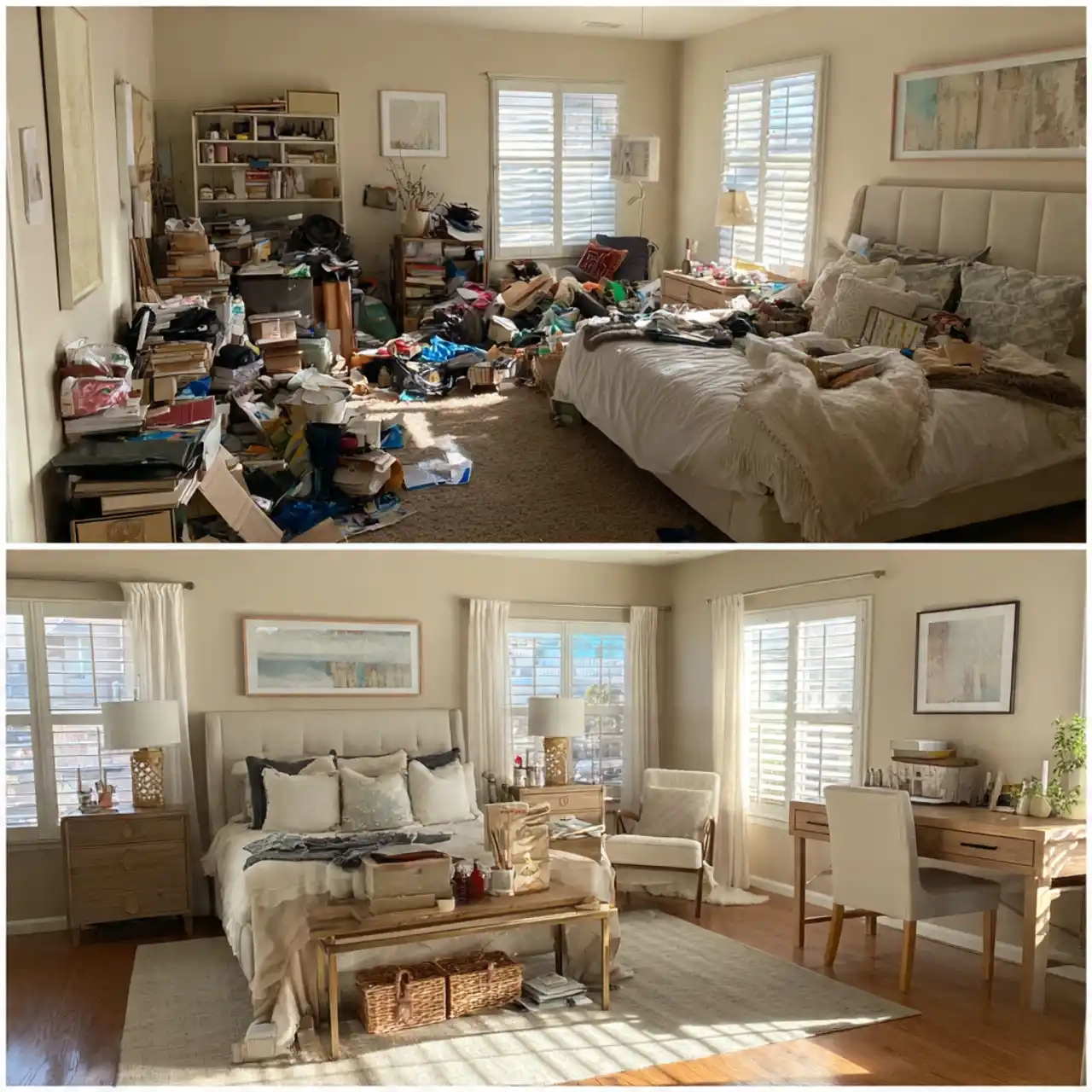
Take before photos of cluttered spaces. After decluttering, take after photos from the same angles. Keep these photo pairs to remind yourself of the transformation you achieved and motivate you to maintain the progress.
Visual evidence of your success is powerfully motivating during moments when you’re tempted to let things slide. One glance at the before photo reminds you why the effort matters.
Apply the Duplicate Rule
Eliminate duplicates ruthlessly. You don’t need five spatulas, three can openers, or fifteen black t-shirts. Keep the best version of each item and donate the rest. Duplicates create decision fatigue and waste storage space.
The only exception is true backups for frequently used items that would be inconvenient to replace immediately if they broke. Even then, two is usually sufficient—not five or ten.
The Shopping Bag Trick
Place a reusable shopping bag in your car specifically for donations. When you identify items to donate while at home, immediately place them in the bag rather than a pile in your garage or closet. Next time you’re running errands, drop the bag at a donation center.
This removes the friction of making a special trip to donate, which often causes donation items to sit for months. The bag in your car makes donating as convenient as any other errand.
Declutter Your Digital Space
Physical clutter isn’t the only kind that drains energy. Unsubscribe from emails you don’t read, delete apps you don’t use, organize your desktop files, and clear your photo library of duplicates and blurry shots.
Digital decluttering improves daily functionality and reduces stress just like physical decluttering. Apply the same principles—if you don’t use it or it doesn’t add value, delete it.
The Reverse Packing Method
Pretend you’re moving and must pack everything you own. As you mentally or physically pack each item, ask yourself: would I pay to move this to a new home? If the answer is no, you probably don’t need it at all.
This exercise reveals how much we keep simply because it’s already here, not because it adds value to our lives. Moving costs money and effort—use that lens to evaluate what’s truly worth keeping.
Create a Capsule Wardrobe
Reduce your clothing to a curated collection of versatile pieces you love and actually wear. Aim for quality over quantity—fewer items that mix and match effortlessly beat a stuffed closet of rarely-worn clothes.
Most people wear the same small portion of their wardrobe repeatedly while the rest collects dust. A capsule approach aligns what you own with what you actually use, eliminating decision fatigue every morning.
The Seasonal Rotation System
Store off-season items in clearly labeled bins in less accessible storage areas. This keeps daily spaces uncluttered while still maintaining seasonal belongings. When seasons change, swap the bins rather than cramming everything into prime closet space year-round.
This system works especially well for clothing, sports equipment, and holiday decorations. You only live with the current season’s items, making everything feel more manageable.
Apply the Visibility Principle
If you can’t see it, you won’t use it. Store items where you can view them at a glance rather than stacking things in deep piles or opaque containers. Clear containers, shallow drawers, and open shelving increase actual usage of what you own.
Hidden items become forgotten items. Make your belongings visible and accessible, or acknowledge you don’t need them and let them go.
The No-Cost Declutter Challenge
Commit to decluttering without spending money on organizing products for thirty days. This forces you to actually reduce what you own rather than just rearranging or containing it more attractively.
Most people discover they don’t need fancy organizers once they eliminate excess. If you still need storage solutions after thirty days of ruthless decluttering, then—and only then—purchase what you need.
Declutter by Timeline
Sort items by when you last used them. Things used daily stay easily accessible. Things used weekly go in secondary storage. Things used monthly or less go in deep storage or get donated entirely.
This method naturally surfaces items you’re keeping “just in case” but never actually use. If it’s not accessed at least monthly, question whether you need it at all.
The Friend Test
If a friend asked to borrow something you own, could you locate it within two minutes? If not, you either have too much stuff or poor organization—both problems solved through decluttering.
Functional homes allow easy retrieval of belongings. If you can’t find and access your possessions quickly, the system isn’t working regardless of how organized it looks.
The Maintenance Plan
Schedule regular mini-declutter sessions on your calendar like any other appointment. Fifteen minutes weekly prevents major accumulation and maintains the order you’ve created.
Decluttering isn’t a one-time event but an ongoing practice. Regular maintenance sessions catch clutter before it becomes overwhelming, making each session quick and painless.
The Gratitude Release
Thank items for their service before donating them. This practice, popularized by organizing experts, helps release emotional attachment. Acknowledge what the item provided, then consciously choose to pass it along with gratitude rather than guilt.
This mindset shift transforms decluttering from loss to abundance—you have so much that you can afford to share. It reframes the process positively rather than focusing on what you’re giving up.
The Future-Self Favor
Every time you organize or declutter a space, do it in a way that makes life easier for your future self. Create systems that are simple to maintain, not just pretty to photograph.
Ask yourself: will this system still work when I’m tired, rushed, or stressed? If maintaining the organization requires constant effort or perfect conditions, it will fail. Design for sustainability, not perfection.
Making Decluttering Stick Long-Term
The real challenge isn’t the initial decluttering—it’s maintaining a clutter-free home permanently. This requires shifting your relationship with possessions and consumption. Before acquiring anything new, ask whether it adds genuine value or just temporary excitement.
Understand that empty space has value. Breathing room in closets, clear counters, and tidy surfaces reduce stress and increase peace. You’re not depriving yourself by keeping less—you’re gifting yourself freedom from managing, cleaning, and organizing excess stuff.
Remember that perfection isn’t the goal. Life happens, and clutter will occasionally accumulate. The difference is having systems and habits that allow quick resets before chaos takes over completely. These hacks provide the tools, but consistency creates lasting change.
Ready to Reclaim Your Space?
Decluttering transforms more than your physical space—it clears mental space, reduces stress, and creates room for what truly matters in your life. These thirty-five hacks give you practical starting points that work in real life, not just in theory.
Start today with just one hack that resonates with you. Build momentum with small wins, and before you know it, you’ll have created a home that feels peaceful, functional, and genuinely yours. The clutter doesn’t stand a chance against consistent action and smart strategies.